Platform Workflow Overview
The AssureGrid platform workflow organizes the audit lifecycle into a connected sequence so that planning, walkthrough preparation, testing support, approvals, and reporting remain aligned from the first setup inputs through final documentation.
At a glance
Create a connected operating flow for audit execution so teams can move from setup to finalized outputs in a structured and reviewable manner.
Audit setup, control inventory alignment, planning generation, walkthrough preparation, execution support, review and approvals, and final reporting.
Audit topic, memo or scope description, selected regulations or guidelines, control inventory, and any supporting setup context.
Planning artifacts, reviewable execution materials, approval records, attestation actions, and workpapers with a full audit trail.
What the platform workflow does
AssureGrid is organized as a connected workflow rather than a collection of isolated generators. Each stage builds on shared audit inputs and on the outputs produced earlier in the process. This design helps teams maintain continuity across the lifecycle so that the logic used in planning is visible during walkthrough preparation, evidence collection, testing support, review, and reporting.
By keeping the workflow connected, the platform reduces the common audit problem where planning, fieldwork, and reporting are developed in different places and have to be reconciled later. Instead, the user can work through the audit in sequence, review each artifact at the right point, and preserve a documented trail of how conclusions were developed.
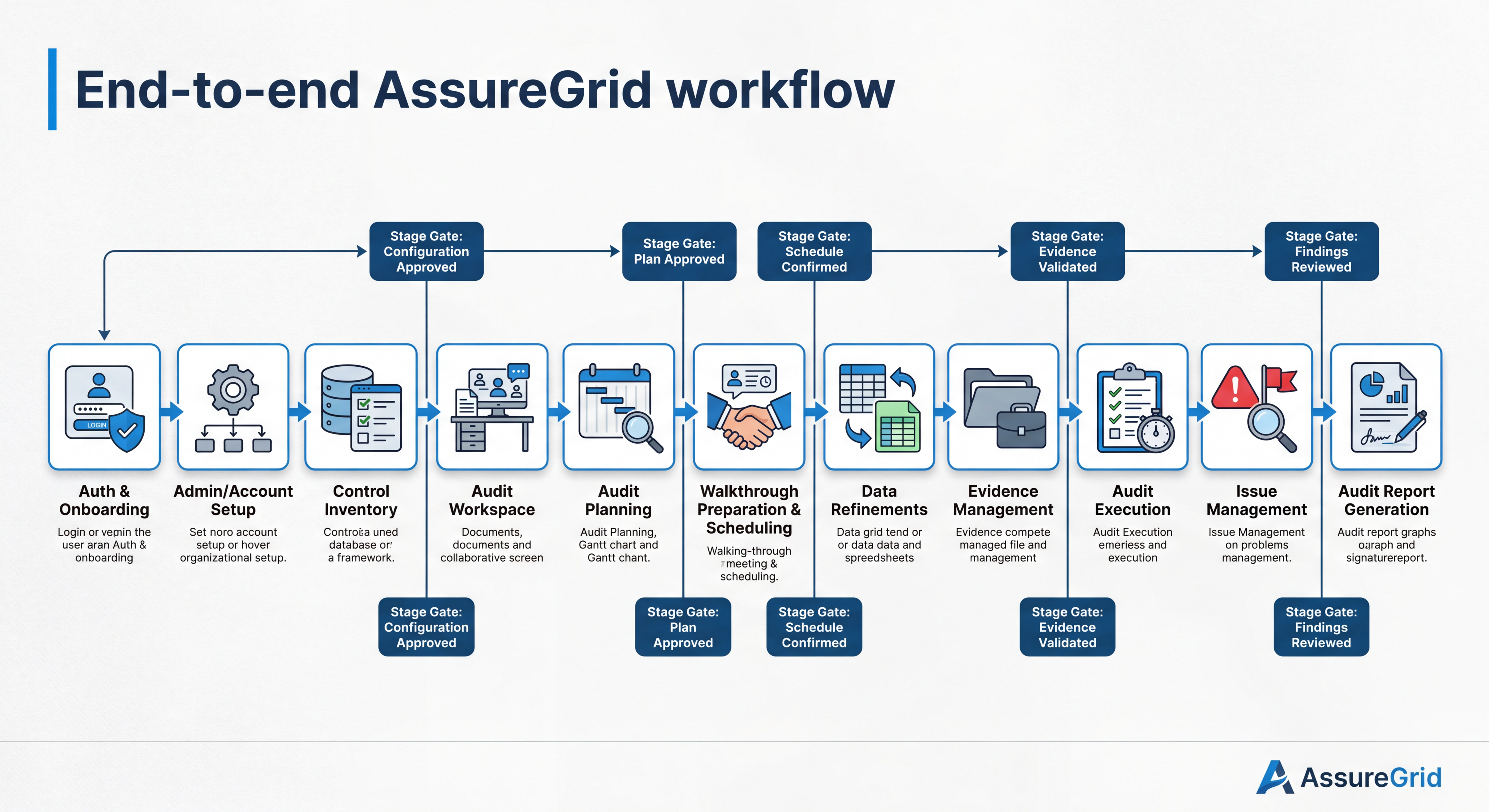
End-to-end workflow stages
| Stage | What happens | Why it matters |
|---|---|---|
| 1. Audit setup | The team confirms the topic of audit, audit memo, regulations or guidelines, and any foundational scope inputs needed for generation. | Establishes the context that drives the rest of the workflow and prevents downstream artifacts from being built on incomplete scope. |
| 2. Control inventory alignment | AssureGrid uses the underlying inventory and control structure as the base for planning and execution support. | Ensures risks, controls, and domains stay anchored to the operating control model rather than being drafted in isolation. |
| 3. Planning generation | The platform produces the RCM, test steps, evidence list, and walkthrough questionnaire in a guided sequence. | Creates a reviewable planning package that can move into execution with stronger consistency and less manual drafting. |
| 4. Walkthrough and execution readiness | Teams use the generated outputs to prepare for control-owner discussions, evidence requests, and testing activities. | Improves fieldwork readiness and reduces avoidable follow-up caused by underprepared planning. |
| 5. Review, approvals, and attestation | Outputs are reviewed, approved, or attested by the relevant users before they are relied upon downstream. | Introduces governance into the workflow and records who reviewed or confirmed key artifacts. |
| 6. Documentation and reporting | The platform carries approved content into workpapers and reporting-oriented outputs, preserving a traceable audit trail. | Helps teams move faster from review activity to evidence-backed conclusions and finalized documentation. |
Shared interface elements across the workflow
-
Audit inputs area: Displays the audit topic, memo, regulatory context, and other shared setup fields that inform the current step.
-
Stage navigation: Shows where the user is in the lifecycle and which stages have already been completed or still require attention.
-
Action controls: Present step-specific actions such as generation, history review, AI assist, save, submit, or approval-related actions.
-
Editable output areas: Surface generated artifacts in structured tables or review-ready layouts so users can validate the result before moving forward.
-
Processing visibility: Exposes asynchronous job activity so users can see what is running and when downstream content is ready to review.
How teams should work through the platform
-
Confirm setup inputs and control context before starting generation-heavy stages.
-
Treat planning outputs as review checkpoints rather than automatically final deliverables.
-
Use walkthrough and evidence outputs to prepare the execution team before control-owner interactions begin.
-
Complete review and approval steps before relying on artifacts in downstream workpapers or reports.
-
Use the connected workflow to preserve continuity instead of recreating logic separately in each phase.
Why the connected workflow matters
The value of the platform is not only that it generates outputs quickly. The larger benefit is that AssureGrid keeps those outputs linked so that auditors do not have to repeatedly translate the same scope, control logic, or evidence expectations across separate tools. That reduces rework, improves consistency between reviewers, and makes the final audit record easier to defend.
For teams operating under tight timelines, the connected workflow also makes it easier to manage handoffs. Planning can be reviewed before fieldwork begins, execution support can be tied back to the approved planning package, and final reporting can be traced to the documented review path that preceded it.
Best practice: Use each workflow stage as a controlled handoff point. The platform delivers the most value when teams complete the review expected at one stage before accelerating into the next.