Introduction to AssureGrid
AssureGrid is an AI-powered assurance platform for internal-audit teams that want to automate the most time-intensive parts of the audit lifecycle. It helps audit, risk, and compliance teams generate and manage control inventories, accelerate planning and testing, standardize documentation, and maintain traceability through workpapers with a full audit trail.
At a glance
Provide a software-first audit execution layer that automates planning, testing, documentation, reporting, and control process support.
Internal-audit teams, internal controls teams, risk professionals, and compliance teams responsible for control design, testing, and evidence-backed review.
Reduce manual sampling and repetitive administrative work while increasing audit coverage, consistency, and execution speed.
Record each major workflow step through linked outputs, workpapers, approval actions, and a persistent audit trail.
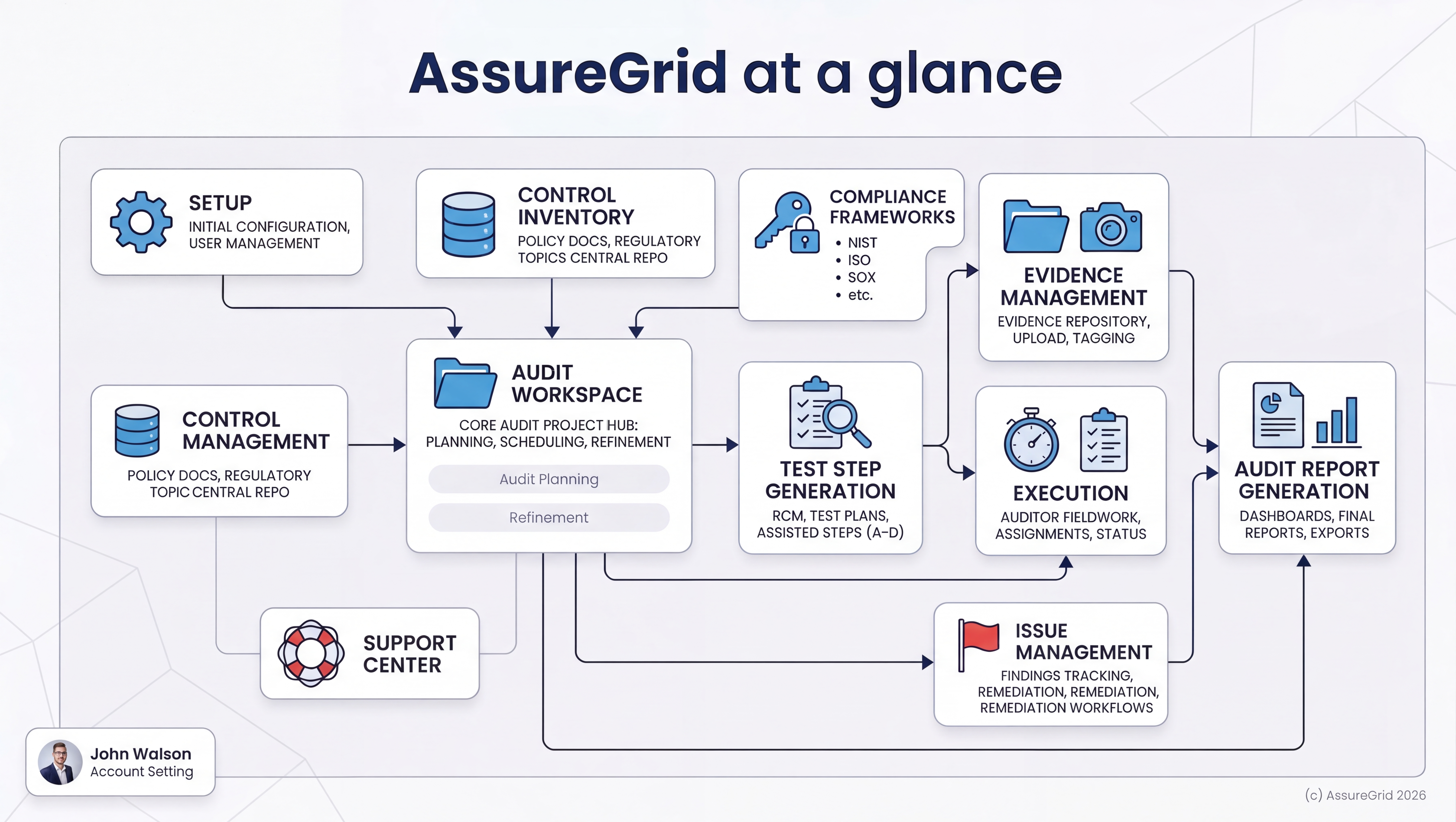
What AssureGrid is
AssureGrid is designed to be the execution layer that sits between audit intent and audit evidence. Instead of forcing teams to manage planning, walkthrough preparation, evidence gathering, testing support, and reporting across disconnected spreadsheets, documents, and point solutions, the platform brings those activities into one controlled workflow. This allows teams to move from audit setup to evidence-backed conclusions in a more structured and reviewable way.
The platform is software-first in the sense that it is built to automate repeatable audit work while preserving reviewer oversight. Generated outputs can be reviewed, refined, approved, and carried forward into downstream stages rather than treated as static drafts. This is especially valuable for internal-audit functions that need to scale quality and throughput without relying on proportional increases in headcount.
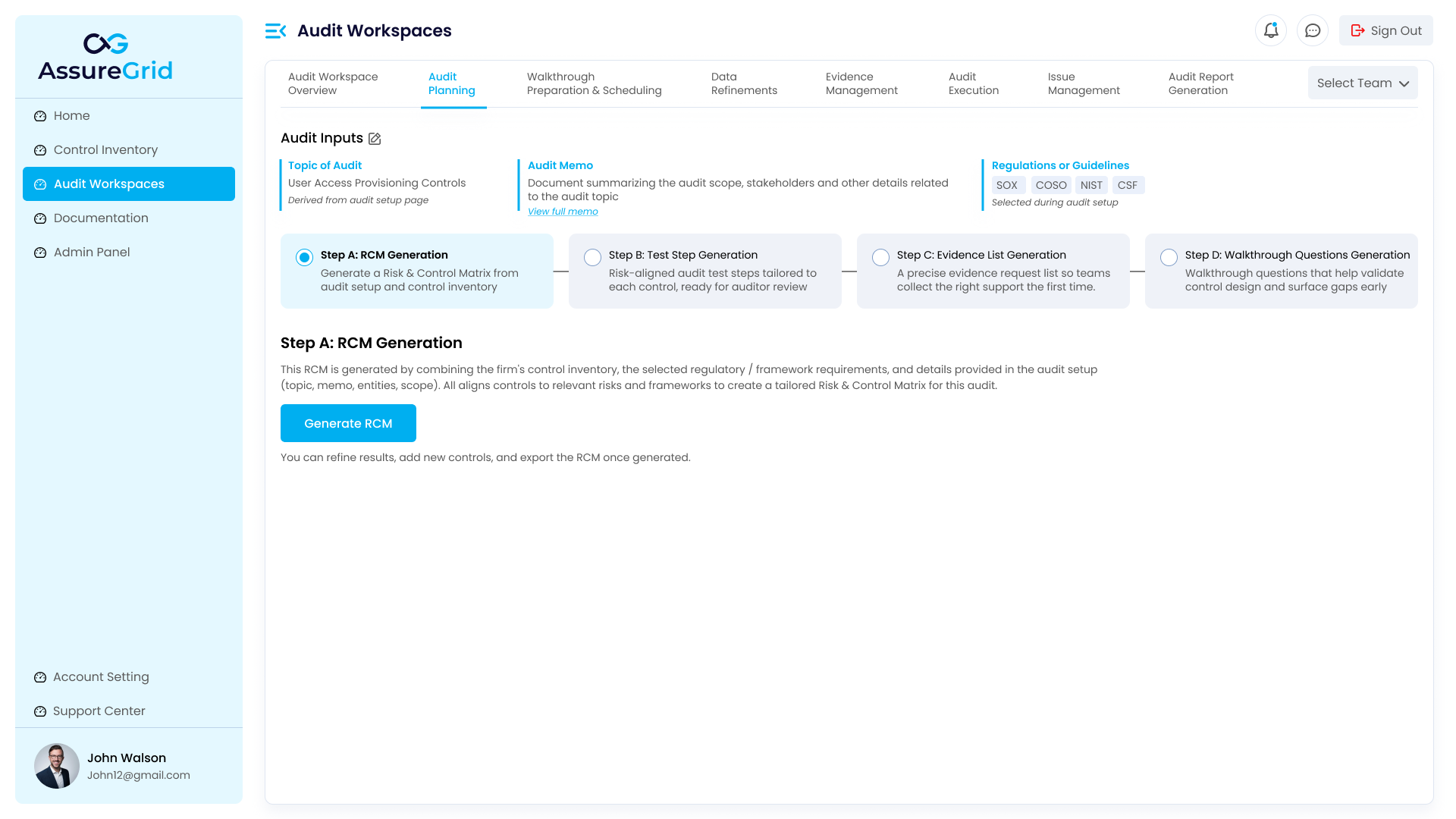
How teams use AssureGrid
In practice, AssureGrid supports the operational work of an audit engagement from planning through reporting. Teams use it to convert audit scope and control inputs into structured planning artifacts, prepare for walkthroughs, organize evidence expectations, document testing activity, and maintain an execution trail that reviewers can follow. Rather than replacing an audit team's judgement, the platform reduces the manual effort required to prepare, organize, and document that judgement.
This makes AssureGrid particularly useful in environments where audit teams must cover more risk with leaner resources, where controls span multiple domains or business processes, or where documentation quality needs to be standardized across multiple auditors and reviewers.
Core capabilities reflected in the platform
-
Automates planning deliverables such as the Risk and Control Matrix, test steps, evidence lists, and walkthrough questionnaires.
-
Supports control process work such as control mapping, control inventory management, walkthrough preparation, and testing support.
-
Keeps planning and execution outputs connected so that downstream artifacts inherit the context established upstream.
-
Provides structured review points so generated content can be refined before it becomes part of the formal audit record.
-
Maintains traceability across outputs through workpapers, approval checkpoints, and an auditable history of actions.
Why audit teams adopt AssureGrid
Audit functions are often constrained by the amount of manual work required before fieldwork can even begin. Teams spend time drafting control documentation, preparing walkthrough materials, organizing evidence requests, and formatting reports instead of focusing on risk assessment, control evaluation, and issue analysis. AssureGrid addresses that bottleneck by automating the most repetitive parts of the lifecycle while keeping the process reviewable and structured.
The result is not only faster execution. Teams can also perform more consistent planning, improve readiness for walkthroughs, reduce rework during review, and expand coverage with a leaner delivery model. For organizations that already have an audit stack in place, AssureGrid complements existing processes by acting as the execution and documentation layer rather than requiring a full operating-model reset.
Best practice: Treat AssureGrid as the operating workspace for the audit lifecycle, not just a content generator. The strongest outcomes come when teams review each generated artifact, resolve issues early, and use the linked workflow to carry clean outputs forward.